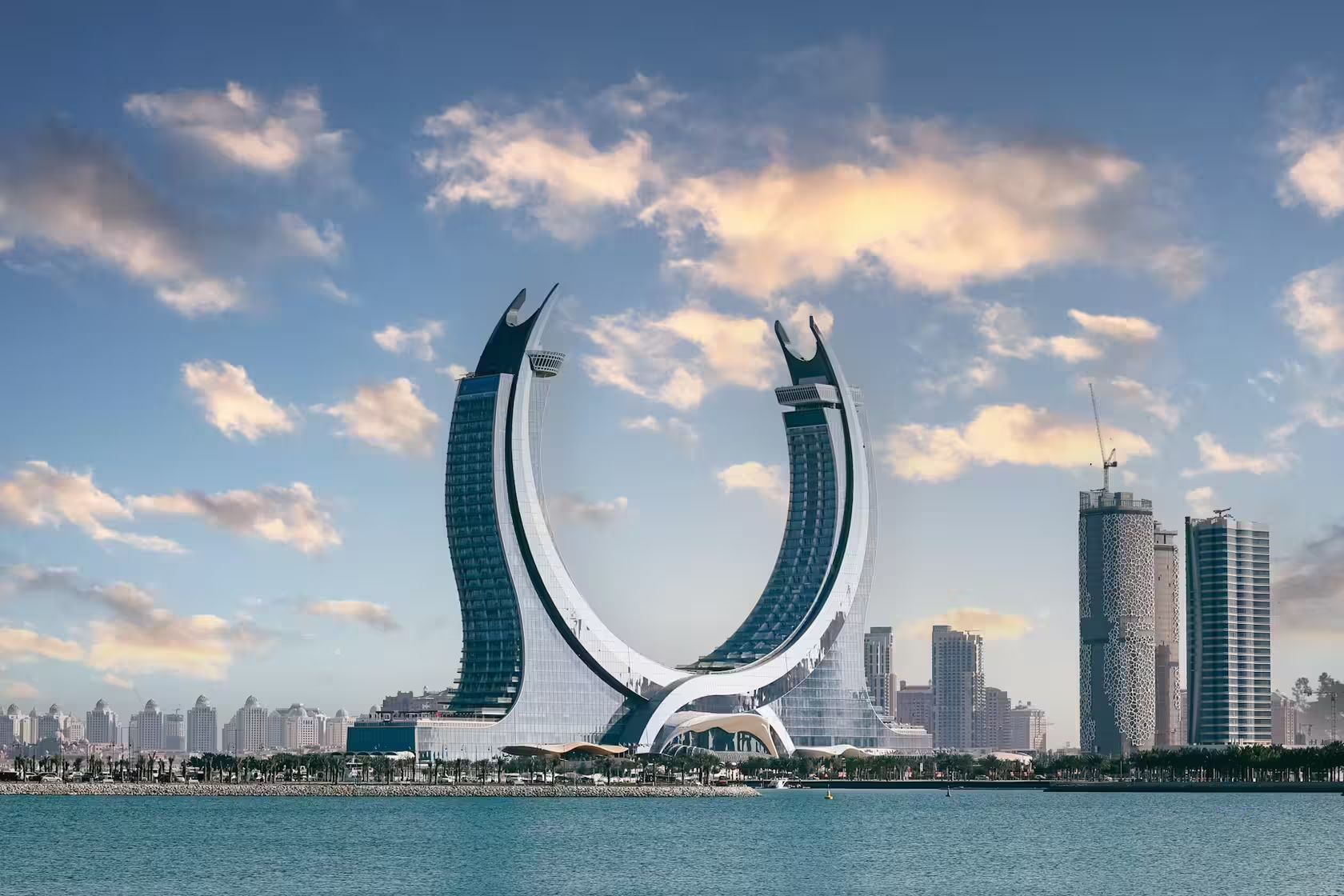
Since hosting the 2022 FIFA World Cup, Qatar's property market has reached a new level of international recognition. But the real question for investors today is what happens after an event of that scale.
Contrary to expectations of a "one-off effect," the market hasn't slipped into stagnation. If anything, it's begun moving into a more mature phase. The infrastructure built for the tournament continues to be put to full use, and the country is cementing its position as the region's business and tourism hub.
Qatar is a market defined by conservative dynamics. There are none of the sharp swings typical of more speculative destinations. Instead, investors here can expect:
That said, it's worth understanding the market's particular character. It's heavily regulated by the state, and liquidity can be lower than in more open jurisdictions.
Investing in Qatar isn't about quick deals. It's about a strategy of capital preservation and steady growth within a stable economy.
That's precisely what draws investors who value reliability every bit as much as returns.
Contrary to expectations of a "one-off effect," the market hasn't slipped into stagnation. If anything, it's begun moving into a more mature phase. The infrastructure built for the tournament continues to be put to full use, and the country is cementing its position as the region's business and tourism hub.
Qatar is a market defined by conservative dynamics. There are none of the sharp swings typical of more speculative destinations. Instead, investors here can expect:
- steady rental demand
- a limited supply of quality properties
- a predictable economic environment
That said, it's worth understanding the market's particular character. It's heavily regulated by the state, and liquidity can be lower than in more open jurisdictions.
Investing in Qatar isn't about quick deals. It's about a strategy of capital preservation and steady growth within a stable economy.
That's precisely what draws investors who value reliability every bit as much as returns.
